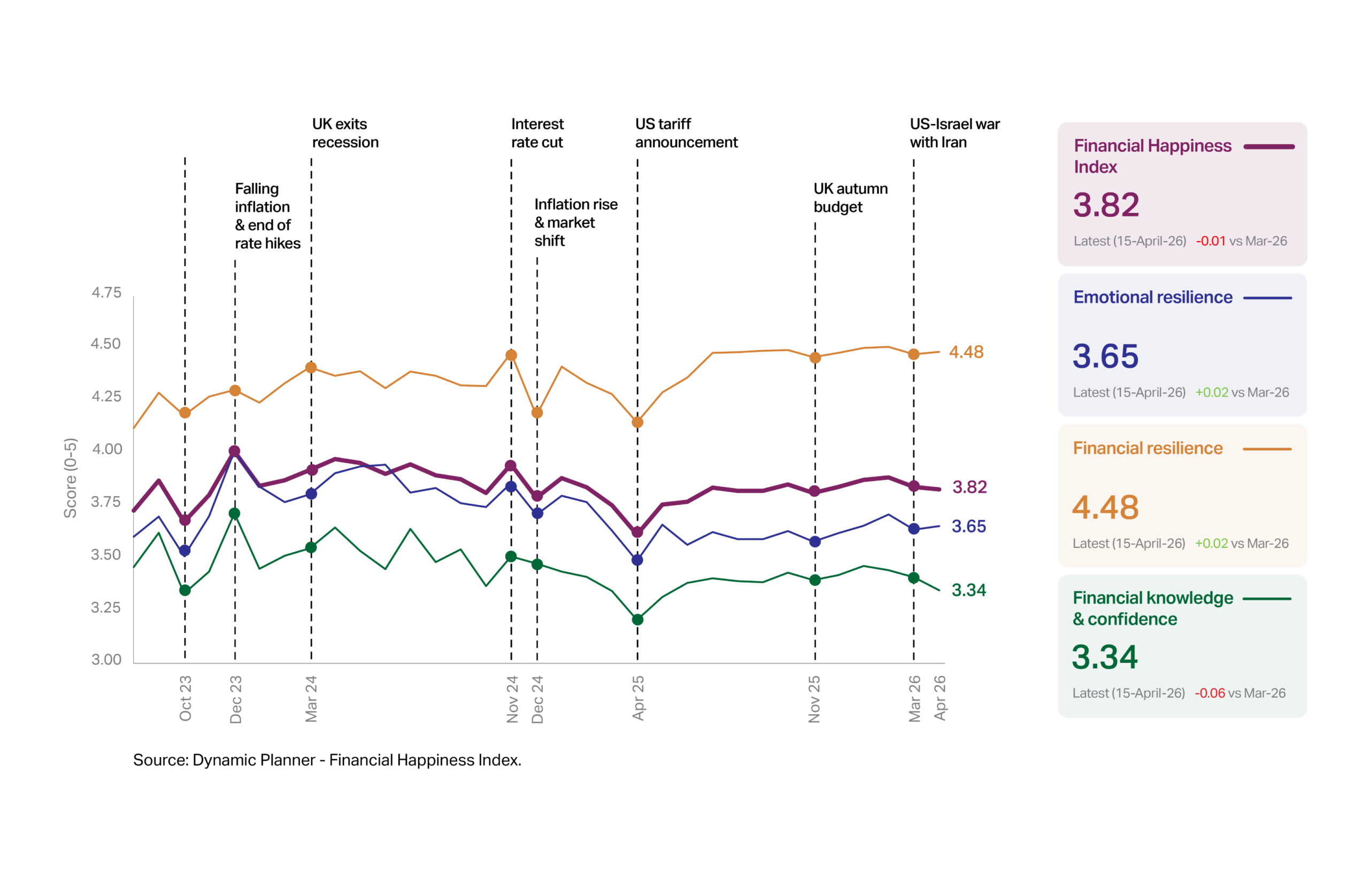
The Financial Happiness Index™ is built on a live dataset established in July 2023 and growing by around 4,000 responses each month, giving advice firms a real-time view of financial happiness and a meaningful benchmark over time.
The Financial Happiness Index™ – How do people really feel about their finances?
Financial happiness isn’t just about how much money someone has. It’s shaped by how secure they feel day to day, how confident they are making financial decisions and how well they cope when life, markets or the economy change.
The Financial Happiness Index™ gives advice firms a new behavioural benchmark for understanding how clients really feel about their financial lives and how that changes over time.

Financial resilience
How stable someone feels day-to-day, including income, savings, and the ability to absorb financial shocks.

Emotional resilience
How well someone feels able to cope, adapt and maintain a sense of progress when financial pressure increases.

Financial knowledge
How confident someone feels making financial decisions, and whether money worries are affecting their wellbeing.

Benchmark your clients
Compare your client base against aggregated, anonymised national data to understand how your clients’ financial happiness compares with the wider picture.

Track progress over time
See how your clients’ financial happiness evolves across review cycles, and how external events such as Budget announcements, interest rate changes or market volatility affect sentiment.
Identify advice opportunities
Our data shows meaningful differences by gender and life stage. These insights can help you tailor communication, education and support for specific client segments.
Evidence better outcomes
Improvement in index scores over time can provide tangible, data-led evidence of the positive impact advice is having on clients’ confidence, resilience and long-term wellbeing.
Deepen risk conversations
Clients with higher willingness to take risk tend to score higher on the index. The data helps advisers distinguish confidence from financial resilience.
