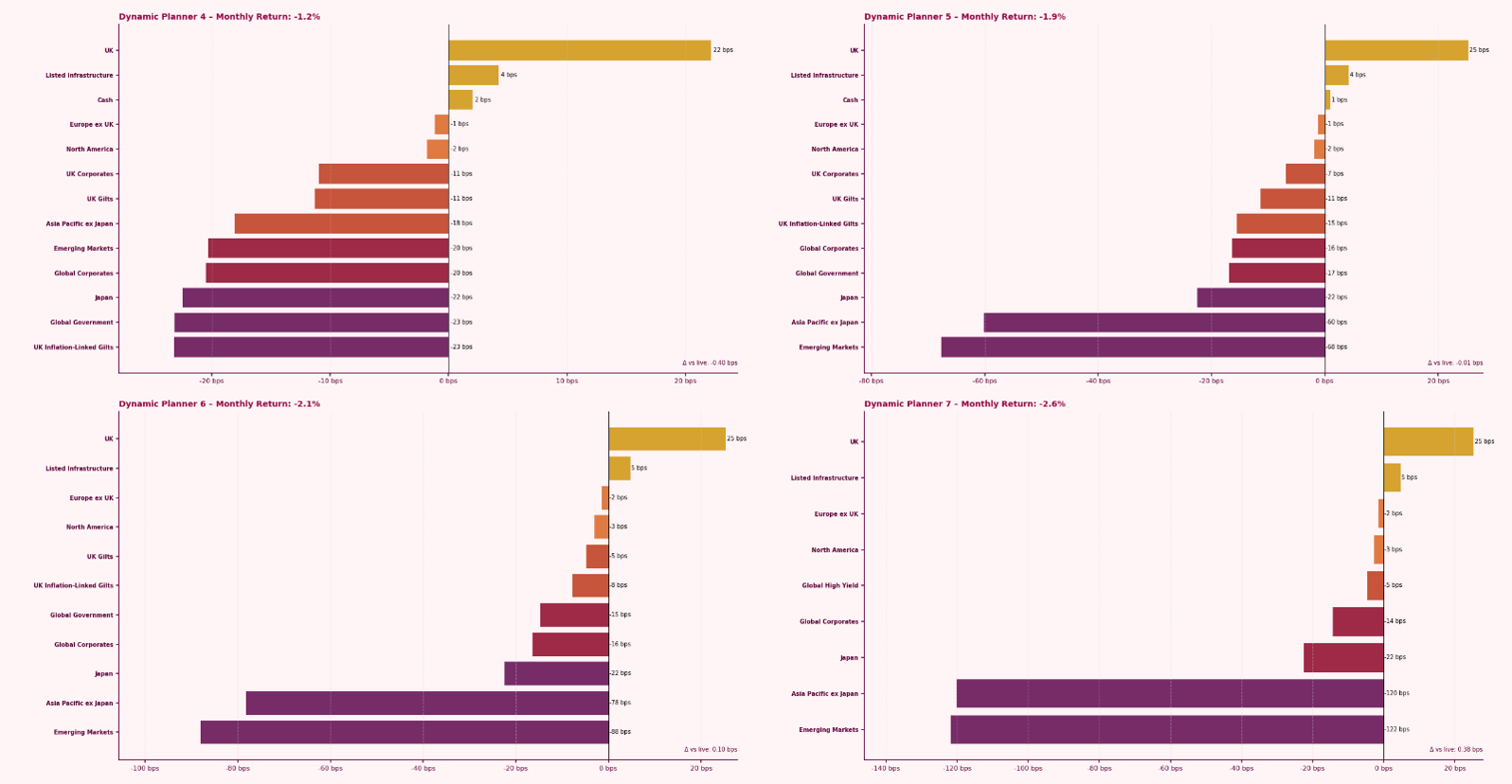
(Chart 1)
It was a tough month for Dynamic Planner benchmark portfolios. Returns ranged from -1.2% (Dynamic Planner 4) to -2.6% (Dynamic Planner 7) (Chart 1), with higher-risk portfolios bearing the brunt of a broad-based equity and fixed-income selloff. The pattern was clear: risk assets suffered, defensive positioning paid.
Geopolitical shock dominates
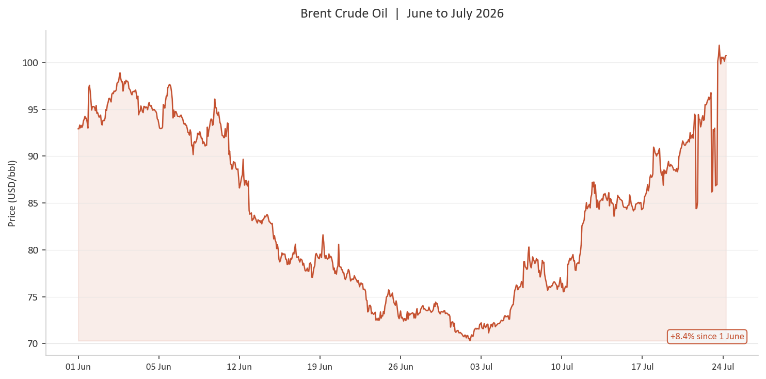
The shift came hard and early in July. US strikes on Iran, followed by Iranian retaliation, triggered a sharp repricing of geopolitical risk. For Emerging Markets and Asia Pacific ex-Japan—the largest detractors across all portfolios—the shock had specific teeth. These regions are substantial net importers of energy. A spike in crude (Brent climbed from $70 to nearly $100 per barrel mid-month before retracing to the high $80s; Chart 3) translates directly into terms-of-trade pressure. More fundamentally, the Strait of Hormuz remained contested, introducing a structural supply risk that energy markets can no longer ignore.
Developed markets faced a different but overlapping pressure. The geopolitical shock arrived alongside a sharp reassessment of AI capital expenditure sustainability. Semiconductor stocks sold off sharply, with disruption in memory-chip supply chains compounding the move. Since Asia’s chipmakers now carry outsized weight in Emerging Market benchmarks, regional weakness was pronounced.
(Chart 2)
(Chart 3)
Defensive sectors deliver
Investors rotated into defensive characteristics. Financials, energy, and healthcare all proved more resilient than technology through the pullback. The UK market benefited disproportionately from this rotation, posting positive returns, largely because its benchmark carries more of those defensive sectors and less technology exposure than most major indices. Listed infrastructure also contributed positively, reflecting its stable cash-flow profile.
Government bonds: the hedge that failed
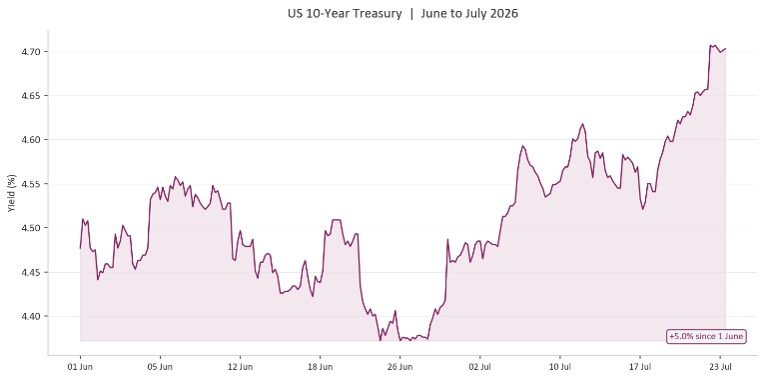
Fixed income offered no shelter. Government bond yields rose across major markets, with the US 10-year illustrating the move (Chart 2), and because portfolio duration worked against them precisely when equity markets were weak, longer-dated bonds fell furthest. More significantly, the equity-bond correlation inverted. Bonds and equities fell together—a hallmark of inflation-driven selloffs rather than growth-driven ones.
The mechanism is structural. Governments are issuing heavily to fund defence and energy support while central banks hold rates steady. That supply-driven pressure, combined with persistent inflation expectations (reinforced by rising energy prices), is pushing yields higher. Combined with elevated government debt levels, the market is repricing government bonds as riskier, not safer. Corporate credit held up better. Investment-grade corporates refinanced at low rates during the rate-hiking cycle; balance sheets remain sound; defaults benign. Spreads have continued to narrow, even through one of the sharpest government bond moves in a generation. Investors are being paid steadily less to hold corporate credit relative to government debt, which is where the relative value now sits.
Looking ahead
Whether the AI capex reassessment marks a shift in market leadership or a pause within a longer trend remains unclear. Emerging Market indices remain concentrated in a small number of semiconductor names. In energy and geopolitics, the Strait of Hormuz is unresolved and the risk premium remains embedded. And July was a reminder that when inflation rather than growth drives the cycle, traditional hedges fail.